Gars: why Latvians throw the steam
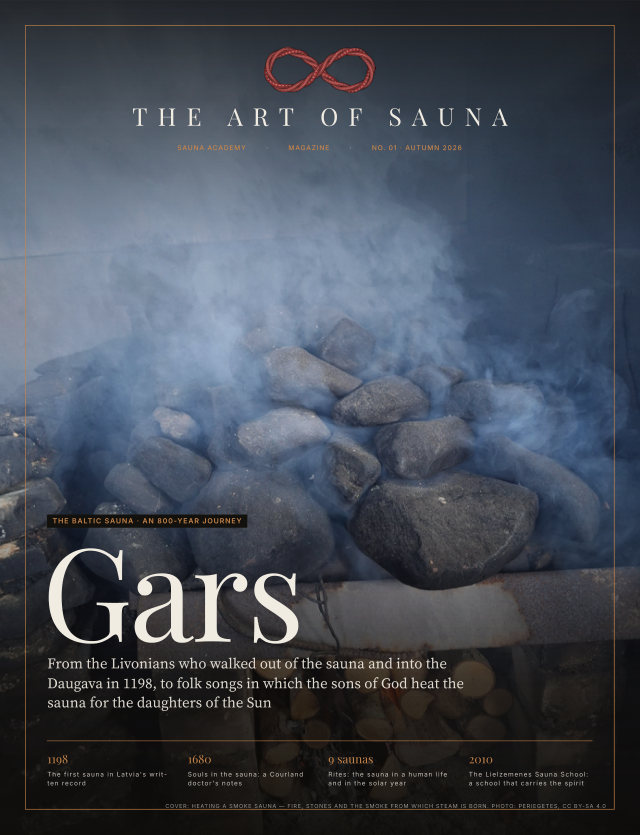
The first sauna in Latvian written history, a word with three meanings, and folk songs in which the sons of God heat the sauna. What Sauna Academy No. 01, the autumn issue, is about.
A Latvian sauna master does not say “pour the steam”. They say: throw the gars.
In Latvian, the word gars has three meanings that rarely meet in one sentence: steam, a person’s inner being, and the souls of the dead. The autumn month when the departed were once fed was called the time of the gars. The first issue of the Sauna Academy magazine follows this word from a medieval chronicle to the dainas, the Latvian folk songs.
1198: the river after the sauna
The first sauna mentioned in writing on the territory of today’s Latvia is a Livonian sauna by the river Daugava. The Chronicle of Henry of Livonia tells how, in the summer of 1198, the Livonians came out of their customary saunas, poured the water of the Daugava over themselves and said that with the river water they were washing away the water of baptism.
The chronicler writes it down with bitterness. For us, two Latin words matter most: balneis consuetis, “their customary saunas”. Here the sauna is not an event. It is everyday life, out of which an event grows. And the order is the same one sauna masters keep today: heat, then the river.
Here the sauna is not an event. It is everyday life, out of which an event grows.
One word, one feeling
In Finnish the sauna steam is löyly, in Estonian leil, in Livonian läul. In the Finno-Ugric languages the root of this word means breath, life and soul. Baltic and Finno-Ugric languages are not related, and yet both families name the sauna steam with a word for the soul.
That is not a shared etymology. It is a shared experience. When water is thrown on the stones, a hot wave moves through the room: it arrives, touches you and leaves. Many peoples have felt it not as physics, but as something alive.
A sauna in the sky
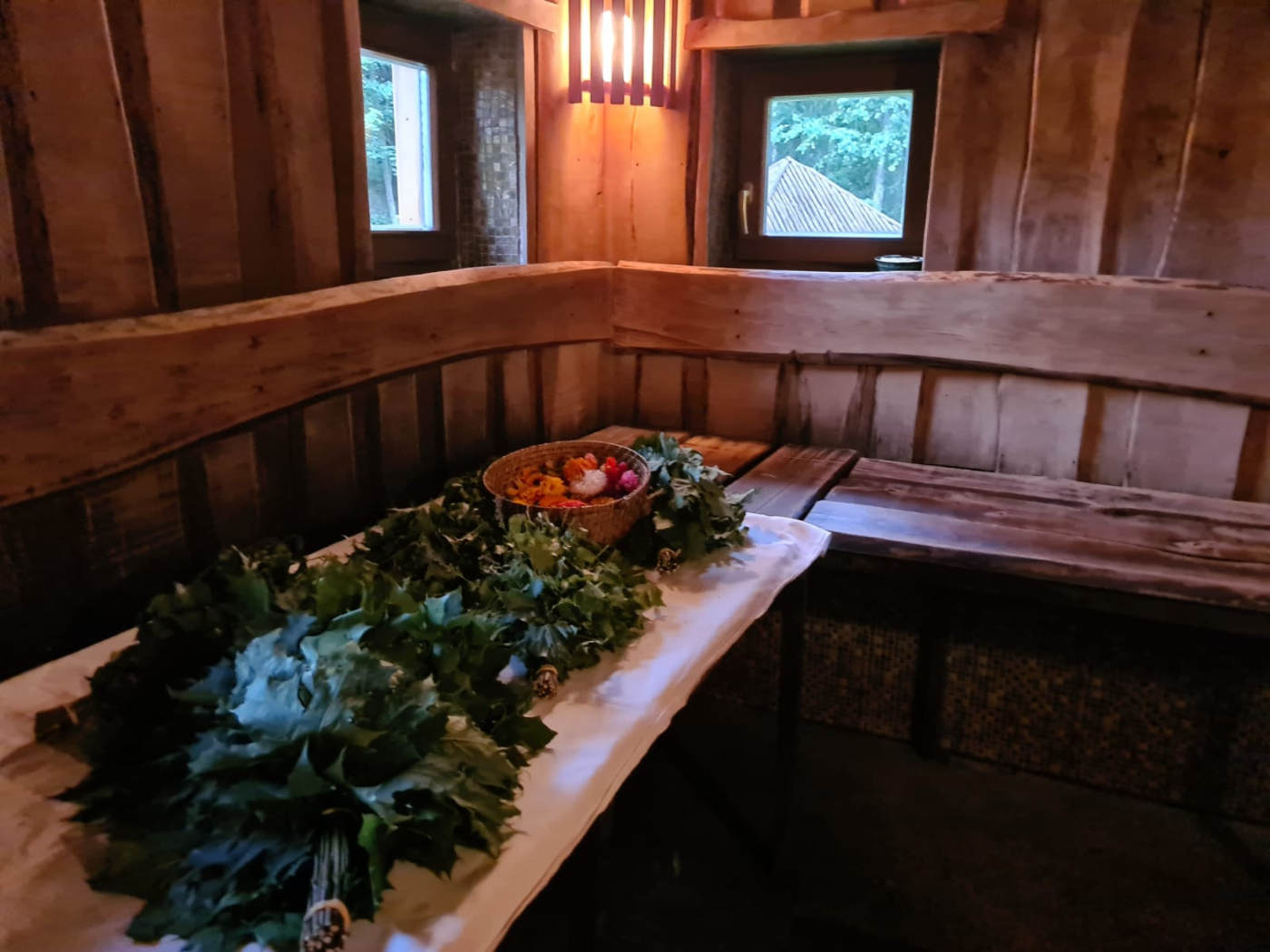
In the dainas the sauna matters so much that it has a place in the sky as well. The sons of God heat it, the daughters of the Sun whisk, Auseklis, the morning star, pours the steam from a silver cup. And the child who finds this sauna asks for what a good sauna master would ask for today:
LD 33844Es tev lūdzu, auseklīti,
Lej gariņu pamazām,
Lai tā man neizkusa
Zelta slota peŗoties.I beg you, morning star, pour the steam little by little, so that my golden whisk does not melt as I bathe.
The dainas show how widely the sauna ran through a human life: women gave birth in it, children were whisked there for the first time, flax was worked and malt was dried there, and it was where people said goodbye.
Rites: the sauna in a life and a year
In the second half of the issue the sauna steps out of history and into life. Laima’s sauna, where a woman gives birth, and the bride’s sauna before the wedding. The time of souls, when the sauna is heated for the departed. Nine saunas in the rhythm of the solar year, each with its own intention and its own whisks, as the Lielzemenes Sauna School describes them. And seven small rites that suit any sauna: they begin with one sentence and end with thanks. The issue closes with the school that carries this spirit on.
Sources: Henricus de Lettis, Heinrici Chronicon Lyvoniae II.8, XIX.3; Latviešu tautas dziesmas (Copenhagen, 1952–56); K. Mīlenbahs, J. Endzelīns, Dictionary of the Latvian Language; I. Talve (1960); A. Bielenstein (1907).
This issue is in the course. Sign up with your email and read all of it on your phone, in your language.
Read in the course →