Why the Latvian Pirts Ritual Is More Than 15 Minutes of Heat
Finnish science measures one precise protocol — heat and cooling. Latvian tradition begins where that protocol ends, building a full ritual on top of it.

Picture two scenes.
In Finland, someone steps into a sauna. They heat up for about 15 minutes. They step out, cool down, sometimes plunge into cold water. They go back into the sauna again. And again. Two or three rounds in total.
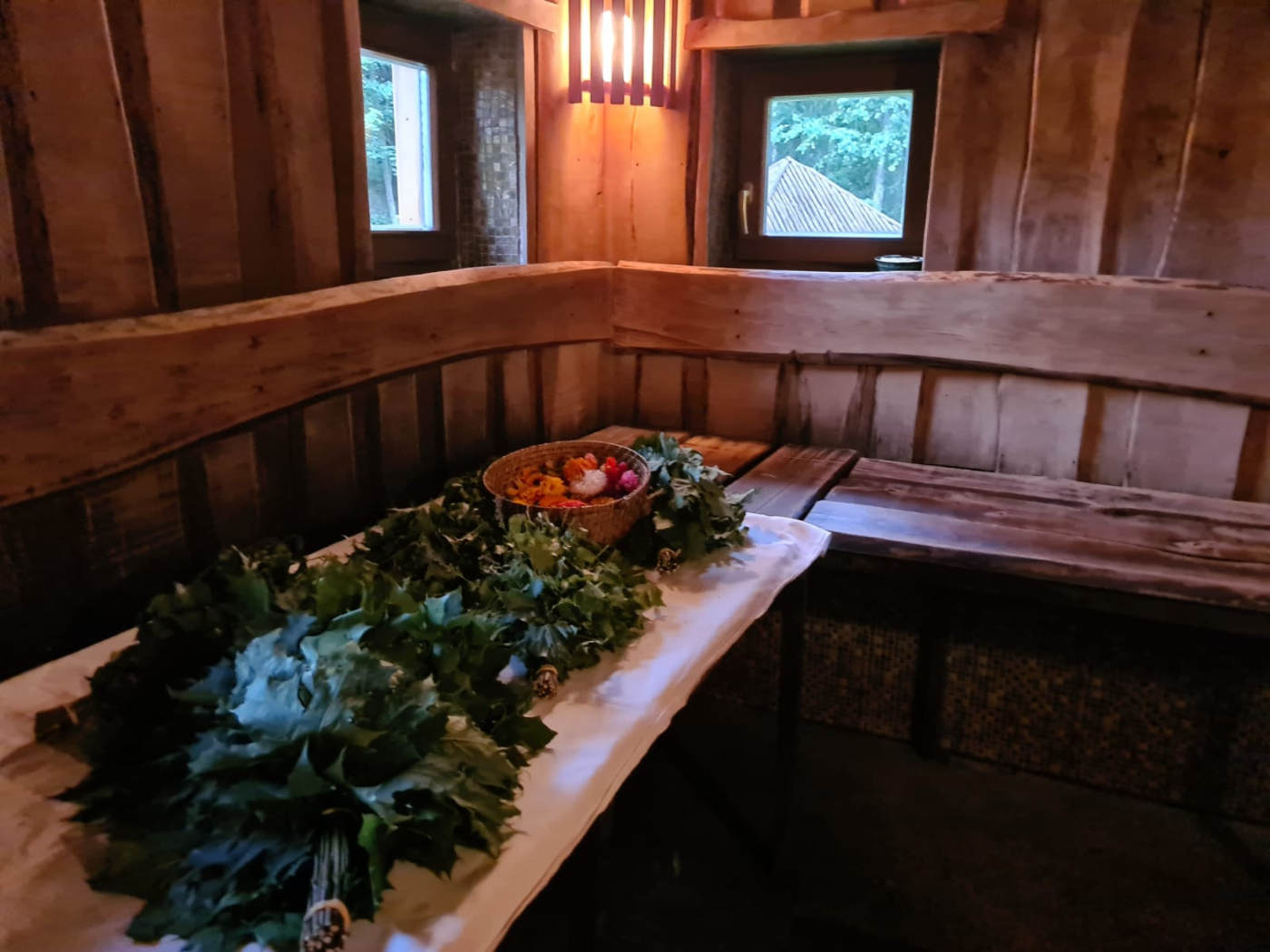
In Latvia, someone steps into a pirts. They heat up. They're scrubbed with salt. They rest in silence while the body finds its own rhythm. They listen to their breath. They're whisked with a bundle of branches gathered for the season. Scent, rhythm, touch and sound weave into one current. Then — an assisted entry into cold water, not as an endurance test but as a guided process. And to close — a conversation that helps the experience settle.
From the outside, both scenes could be filmed under one word — sauna. From the inside, they are two different things. And that difference is the heart of this article.
Tradition and science are in dialogue: each speaks about what it can measure.
Core principle of the Pirts Skola Lielzemenes
What Finnish Science Actually Measures
Most of the pirts physiology evidence the world cites comes from Finland — and it's only fair to say upfront: this research is careful, repeated and valuable.
In one of the most cited reviews (Laukkanen, Laukkanen & Kunutsor, Mayo Clinic Proceedings, 2018), a typical Finnish sauna session is described like this — roughly 5–20 minutes in the heat, then cooling at room temperature or in cold water, with the cycle repeated two to three times. That's the entire protocol. Heat. Cooling. Again.
A large and serious body of science has grown out of this simple protocol — on cardiovascular response, heat shock proteins, autonomic nervous system fluctuation, heart rate variability. That is a real, valuable scientific foundation.
But it matters to understand precisely what that foundation actually proves.
One variable
- Heat for 5–20 minutes
- Cooling in room air or cold water
- Cycle repeated 2–3 times
- Measures heart, skin, nervous system
Full dramaturgy
- A threshold of preparation and consent
- Warming up, salt scrub
- Herbal medicine, aromatherapy, breath
- The great whisking, assisted contrast, integration
Where the Studied Ends
The full Latvian pirts ritual as one whole still awaits its researcher — both for what happens when heat is joined by herbal scent, whisking rhythm, a folk song or a silent phase with a doze, and for EEG data on an individually diagnosable "altered state of consciousness" in the pirts.
This is a precise boundary that shows in which register each claim may be made.
What Happens Between Two "Rounds" in a Latvian Pirts
Where in Finland a person simply cools down between two warming rounds, in the Latvian ritual almost everything that matters most happens in that interval.
- Herbal medicine and aromatherapyWhisks, steam infusions and teas are chosen by season and intent — an old plant-knowledge system tradition has kept for generations.
- Breathing practiceBreath is the instrument a person uses to regulate their own state in heat and cold.
- Salt scrubSkin is a boundary organ — it separates and connects at once. The scrub wakes the sense of touch and helps a person feel their body's own contour.
- Assisted body-balance practice in waterCold is a process guided step by step — the pirtnieks reads the reaction, doses the intensity, and stays present to restore orientation.
- Work with muscular armorThe idea that tension can lodge in the body's tissue comes from Wilhelm Reich's work. Reich's precise mechanism has not been validated — but touch, warmth and a safe presence can genuinely help someone feel tone, breath and boundaries.
- Work with altered states of consciousnessHeat, darkness, rhythm, touch and expectation can shift attention and the sense of time. That is a real change, and it calls for a clear explanation; depth here always keeps its orientation.
Each of these elements on its own is a small step. Together, in precise sequence, they are something else.

Why Sequence Changes Everything
Juris Batņa, a doctor and psychotherapist, compares the ritual to a hand — five steps like five fingers. Each finger is different, but the hand only works once they're joined into one whole.
The sequence of the five steps runs: warming up, scrub, rest and doze, the great whisking, contrast and integration — with a threshold of preparation before all of them.
Mix up that sequence — say, placing the cold contrast before the body has had a chance to feel safe — and the experience stays fragmented. Keep the sequence — safety before symbolism, consent before touch, state before technique — and something else happens: attention gradually shifts from outward orientation to inward sensation, from control to safe release.
Several pirts skola teachers and students describe exactly this shift as transpersonal — reaching beyond the ordinary, individually-focused "self" experience. We call it what it is: a carefully constructed ritual experience that people repeatedly describe in similar words — a description, not a diagnosis.
Finland's 15 minutes of heat and cooling are a real, valuable, scientifically documented foundation. The Latvian pirts ritual starts where that foundation ends — and builds a whole structure on top of it.
Nine Numbers from Finland
The Finnish Kuopio Ischaemic Heart Disease Risk Factor Study (KIHD) followed 2,315 middle-aged Finnish men for more than 20 years, comparing people who used the sauna once a week with those who used it 4–7 times a week. Several separate peer-reviewed papers have grown out of this one cohort, and the numbers are consistently large:
All-cause mortality
Frequent sauna-goers (4–7×/week) died of any cause less often than once-a-week users, over ~21 years of follow-up.
Laukkanen et al., JAMA Internal Medicine, 2015Sudden cardiac death
The single largest association measured in this cohort.
Laukkanen et al., JAMA Internal Medicine, 2015Fatal cardiovascular disease
Lower risk of a fatal cardiovascular event for frequent bathers.
Laukkanen et al., JAMA Internal Medicine, 2015Fatal coronary heart disease
Lower risk of dying from coronary heart disease for frequent bathers.
Laukkanen et al., JAMA Internal Medicine, 2015Stroke
Lower stroke risk, following Finnish men and women for nearly 15 years.
Laukkanen et al., Neurology, 2018Developing hypertension
Lower risk of developing high blood pressure over time.
Zaccardi, Laukkanen et al., American Journal of Hypertension, 2017Dementia
Risk of any form of dementia was markedly lower for frequent bathers versus infrequent ones.
Laukkanen et al., Age and Ageing, 2017Alzheimer's disease
In the same study — a lower risk specifically for Alzheimer's disease.
Laukkanen et al., Age and Ageing, 2017Fewer colds
Regular sauna users caught roughly half as many colds as controls in the study's final three months — the one study here from outside Finland.
Ernst et al., Annals of Medicine, 1990 (Austria)
The first three issues of Sauna Academy on your phone, in your language. The full texts, dainas and practice for your sauna.
Start the course