What Makes Sauna a Ritual
A ritual begins with a threshold, an intention and a sequence — with the way a person is led into an experience and brought back.
Imagine two saunas.
In the first, a person opens the door, sits on the bench and stays until they can no longer bear the heat. They step out, cool down, come back a little later and repeat the same thing twice more.
In the second, everything begins before the door is even opened. Someone has ordered the room, warmed the water, gathered the plants. The sauna master has listened to the person and understood why they are here today. The pace of everyday life is left at the threshold. The heat comes gradually. Each action prepares the next. At the end, the person is not simply sent away — they are given time to return.
From the outside, both experiences are called sauna. But in only one does a sequence of actions become a consciously guided transition. That is what we call ritual.
A ritual is created by the way a person is led into an experience, guided through it, and brought back.
What a ritual is
A ritual is a consciously framed sequence of actions that helps a person move from one state into another — another kind of relationship, another stage of life, another quality of attention.
The transition can be large: birth, union, departure. It can also be very quiet — from work to home, from tension to rest, from the noise outside to the feeling of one’s own body. Ritual gives this transition attention, form and meaning.
Tea, a moment of silence or washing the hands is enough. An object or a movement gains meaning in relation to context, intention and human experience — that is what gives it weight.
Habit, procedure, ritual
We repeat a great deal: we brush our teeth, open our phones, take the same road. A ritual is something more than repetition.
A habit and a ritual work differently. A habit lets us do something with less attention; a ritual calls attention back. A habit runs almost automatically; in a ritual, a person knows they have crossed a threshold and, for a time, entered a different quality.
So one sauna visit can be a habit, another a procedure, a third a ritual, even though they look alike from outside. What differs is what happens within.
In a procedure the main question is: was the action performed correctly? In a ritual the question is different: was the person meaningfully guided through the experience?
Skill is necessary in a sauna ritual. The room must be clean, the heat handled safely; you must know the plants, the whisks, touch and cooling. A ritual, though, is made of something more: technique that serves the person’s process. When the sauna master runs a learned sequence precisely yet barely sees the person in front of them, the practice stays mechanical. When technique serves the person, they become a participant; when it showcases the master’s power, they become a spectator.
Ritual beyond the sauna
Ritual did not originate in the sauna and does not belong only to spiritual practice. It is one of the oldest ways people give order to time, relationships and change. Through ritual, a person says that this moment is not the same as all the others.
When a child is named, their arrival into the lineage is acknowledged. When two people make a vow, their relationship takes a new form. When a community bids farewell to someone who has died, it closes a life story together. Ritual joins visible action to invisible meaning: bread broken together becomes a sign of belonging, water in a rite of passage marks the departure of an old stage, a circle on the ground becomes a space of community.
Life-cycle rituals
They accompany a person when their place in the world changes: birth and naming, coming of age and taking on a new role, marriage and the joining of two families, death and remembrance of the ancestors. The change has already happened or is about to; a person still needs a way to grasp it and to have it recognised in the presence of others. Without that recognition, someone may have changed and still not feel they have arrived in their new place.
Seasonal rituals
They order our relationship with time and nature. The solstices, the harvest, the arrival of spring and the season of the dead are not merely dates — they mark points in nature’s rhythm. Repeating a seasonal ritual, a person does not repeat the previous year; they return to the same point in the cycle carrying a different experience. Ritual time is therefore ancient and always new.
Community rituals
They unite people in a single action. A shared song, procession, feast or lighting of a fire creates a belonging that explanation alone cannot produce. Each person briefly becomes part of a larger whole and does not merely watch, but takes part. Ritual is not a performance; its power comes from participation.
Personal rituals
They happen in solitude: morning tea, a candle, a moment of silence before work, closing the day with gratitude. Again the difference is not in the action but in the attention it is given. A personal ritual makes room for what the haste of daily life otherwise crowds out — to remember, to feel, to close, to choose a direction anew.
What ritual does to time and space
In ordinary life, time flows without interruption. One hour passes into the next, and many events remain without a clear boundary. Ritual pauses that flow for a moment and creates a beginning, a centre and an end.
An ordinary place also changes meaning during ritual. A table becomes a festive table, a courtyard a solstice ground, a forest clearing a place for a vow. The sauna becomes a room in which a person leaves one state and prepares for the next. When the ritual ends, the place becomes ordinary again, but the person leaves it with an experience that now has form and a place in their life story.

The five pillars of a sauna ritual
- ThresholdA ritual has a perceptible beginning and end. The sauna door is a physical threshold, but the boundary is not made by the room alone — it can be marked by a conversation, tea, washing the feet, silence or a few clear opening words. The threshold says: the pace of everyday life stays outside; a different quality of attention begins here.
- IntentionIntention answers the question of why we are in the sauna today. It can be simple — to rest, to feel the body, to close the week, to be in silence. Intention is not a command imposed on experience. It gives the actions direction while leaving room for what the ritual reveals on its own.
- SequenceIn ritual, one action prepares the next. Warmth prepares the body for touch. The scrub brings attention back to the skin. Rest makes room for change. Whisking joins heat, rhythm, plant and touch. Cooling changes the state. The closing lets the experience settle. Mix up the order and the elements stay separate techniques; hold the sequence and they begin to work as one whole.
- EmbodimentThe meaning of a ritual is not only explained — it is experienced in the body. Fire is not only a symbol; it gives real warmth. Water becomes steam and meets the skin. A plant brings scent, texture and movement. Rhythm shifts attention. Silence makes it possible to hear the breath. What the mind has not yet put into words becomes tangible through temperature, weight and touch.
- IntegrationRitual does not end at its culmination. After heat and cold the body needs time; after an intense experience a person has to regain their orientation. Rest, water, a quiet conversation or silence helps the return to ordinary time. Without a closing, a strong experience stays open and unclear. Integration is not decoration — it is part of guiding a ritual well.
Sauna: a place, a practice and a relationship
There is no single answer to the question of what a sauna is. It is a building where stone, fire, water and air meet. It is a thermal practice — warming, sweating, resting, cooling. It is a cultural institution, where knowledge of plants, cleanliness, hospitality and life’s transitions has passed from one generation to the next.
In a guided ritual the sauna is also a relational space. A person entrusts their body, sensations and vulnerability to the sauna master, so the master’s skill cannot be separated from how they listen, touch and hold the flow of the ritual.

Sauna in Latvian life-cycle rites
In earlier times the sauna was not only a place for weekly washing. It stood beside the moments when a person’s status changed: a child entered the lineage, a young person took on an adult role, a bride said farewell to her life as a maiden, the departed was prepared for the last rite of life. The book Tauta, kas aicina pirtī Dievu — The People Who Invite God into the Sauna — calls the sauna the church of Māra and Laima: a secluded, warm room where water, fire, plants, song and human presence accompanied the transitions of life.
Pirtīžas — the transition of mother and child
Pirtīžas belonged to the cycle of rites around birth; in the source, krustabas are described in three parts — birth, pirtīžas and the child’s reception into the lineage. Pirtīžas took place after childbirth, once the mother had begun to recover. At its centre were the child’s first bath, care for the mother and the symbolic recognition of mother and child as two separate persons. The child was washed in a warm herbal bath; the mother was given gentle whisking with linden, birch or mugwort — not the strong whisking, but a slow caress with warm, fragrant whisks. Water, firewood, plants and songs carried the meaning of blessing and protection. It ended with placing the child in the cradle, a lullaby, a feast and thanks.
The point of pirtīžas was a transition: from birth into family life, and from the original unity of mother and child into two separate yet connected persons.
Ievestības — entering the company of adults
Ievestības marks the passage from the state of a child or youth into an adult role and its responsibility. The source describes the reception of boys into the company of men: the young person learned skills, underwent trials, took on responsibility, made a vow and received the community’s recognition; the sauna ritual served as the culmination of initiation. No precise account of the ancient rite has survived, but the core of the transition is clear — the young person leaves the place of a child and is recognised as someone able to take responsibility for themselves and their people: preparation for the new role, a meaningful trial, the presence of a mentor or community, a vow, and recognition of the new state.
The bridal sauna — farewell to maidenhood
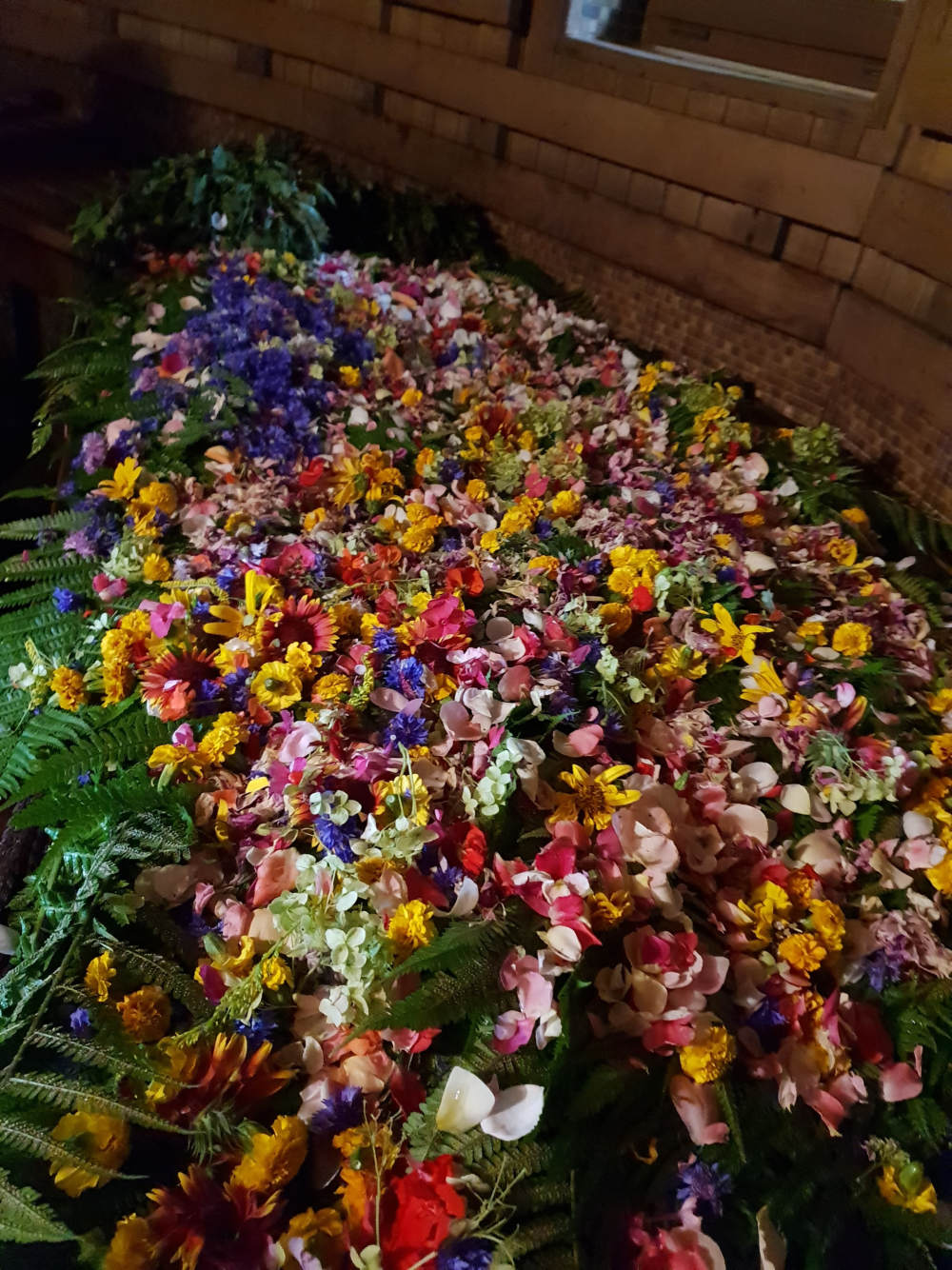
The bridal sauna took place before the wedding rites. The bride, with her mother, sisters or friends, prepared for a new stage of life. The room was decorated with plants and flowers; the ritual could begin with bathing the feet, then a scrub, whisking and rinsing. But the quantity of means was not the point.
One of its most significant moments was the washing of the bride’s back. The mother washed her daughter’s back — the part of the body linked to the past and to what a person cannot see for themselves. It became a time for conversation, gratitude and reconciliation. The bridal sauna marked a farewell to maidenhood and preparation for the rite of union. Today the same principle continues in a shared sauna for bride and groom before the wedding.
Tending the departed — the last rite of life
The place of the sauna in the course of life did not end with the wedding. The source also describes using the sauna to tend the body of the departed before the funeral rites, especially when that person had built the sauna or visited it regularly. Here the sauna appears again as a threshold space — a place for a dignified farewell and the final care of the body.
Four rituals, one language of transition
Pirtīžas, ievestības, the bridal sauna and the tending of the departed are outwardly very different, but their inner structure is one.
| Moment in life | Transition | Role of the sauna |
|---|---|---|
| Pirtīžas | From birth to the new place of mother and child within the family | Washing, care, blessing, reception |
| Ievestības | From childhood to adult responsibility | Preparation, trial, vow, recognition |
| Bridal sauna | From maidenhood to marriage | Farewell, reconciliation, cleansing, accompaniment |
| Funeral tending | From life to the last rite | Dignified care of the body and farewell |
Each has a threshold, a sequence of actions, the presence of others and a clear closing. In these transitions the sauna is not merely the location — through warmth, water, touch and song it makes change physically tangible.
When sauna becomes ritual
What makes a sauna a ritual is the threshold, the intention, a sequence in which one action prepares the next, the person as a participant, and a calm return after the culmination.
Ritual gives sauna its form.
Sauna gives ritual its body.
Then the sauna becomes a place where a person consciously leaves one state, passes through an experience and returns.

The first three issues of Sauna Academy on your phone, in your language. The full texts, dainas and practice for your sauna.
Start the course